Key Takeaways
• Disposable stethoscopes reduce diagnostic accuracy
• Patient-room devices still become contaminated during routine use
• Clinicians often revert to personal stethoscopes for careful exams
• Workflow-based hygiene solutions improve compliance
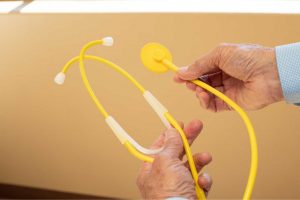
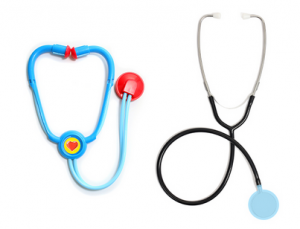
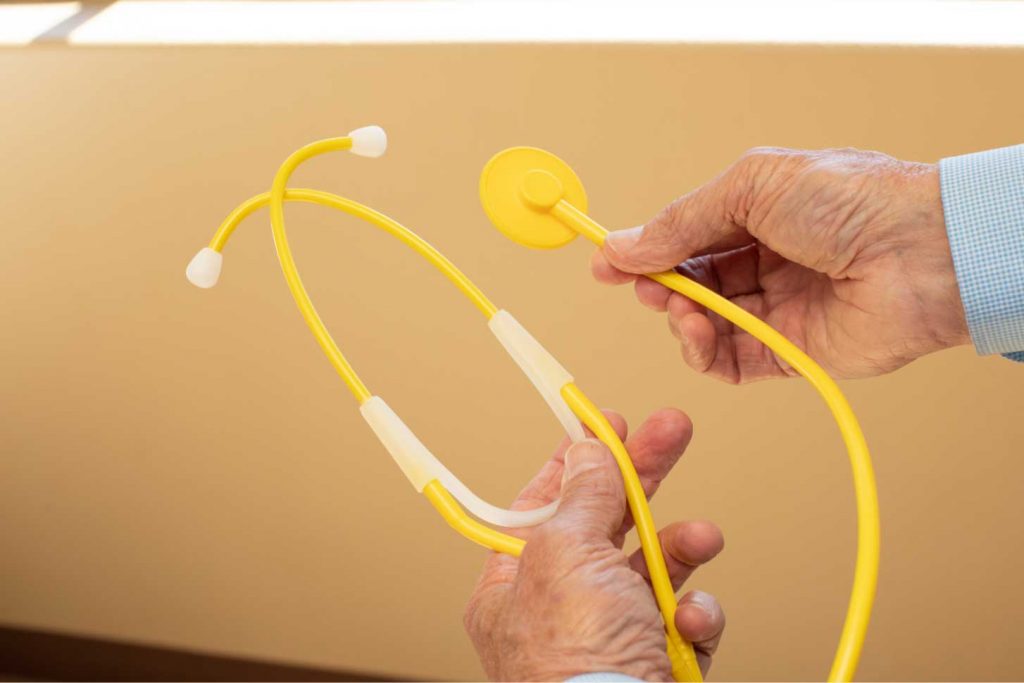
“Useless. Cheaply made, but not cheap to procure. Can’t hear a thing out of them. ‘Fisher-Price’ toys!”
These are the common reactions we get from clinicians when we ask them just how much they like using their single-patient disposable stethoscopes.
Hospitals adopted disposable stethoscopes with a clear goal: Reduce the risk of infection between patients.
At first glance, the idea seems practical. Place a stethoscope in each patient room. Limit cross contact between patients. Replace it when the patient leaves.
But over time, clinicians and infection prevention leaders have noticed a pattern. Disposable stethoscopes do not solve the stethoscope hygiene problem as well as many expected.
The reasons come down to three issues: diagnostic quality, contamination during use, and clinical workflow.
Disposable Stethoscopes Often Reduce Diagnostic Accuracy
The stethoscope remains one of the most widely used diagnostic tools in healthcare. Clinicians rely on it to detect heart murmurs, lung sounds, and other subtle clinical findings during routine exams.
Disposable stethoscopes often use lighter materials and simpler construction than clinical grade devices. This design can reduce sound clarity.
In testing environments, clinicians using disposable stethoscopes have shown higher rates of misidentifying cardiac murmurs compared with those using high quality clinical stethoscopes, with one peer-reviewed publication revealing a 10.9% misdiagnosis rate. Missing a murmur can delay recognition of serious cardiovascular conditions, potentially causing harm to a patient.
Because of this limitation, many clinicians still rely on their own stethoscope when they need a careful exam.
When this happens, the intended infection control benefit of the disposable device disappears.
Though this behavior is understandable. Clinicians trust the sound quality of the instrument they use every day.
It is a pity they’re being forced to choose between adhering to protocols (albeit for an implementation that is not evidence-based), or missing vital diagnostic sounds when they examine their patients!
Disposable Stethoscopes Still Become Contaminated
Disposable stethoscopes do not remain sterile once they enter a patient care environment.
During routine use, the diaphragm touches skin, bedding, clothing, and medical equipment. These surfaces can carry bacteria and other pathogens. As a result, microbes can accumulate on the stethoscope during the course of patient care.
Studies have shown that patient room stethoscopes can become colonized with hospital organisms after routine use. Bacteria such as MRSA have been found on both personal and shared stethoscopes in clinical settings.
This means a disposable stethoscope may still carry pathogens during repeated exams of the same patient or during contact with staff and nearby surfaces.
The device may start clean, but it does not stay clean.
The Real Challenge Is Consistent Stethoscope Hygiene
Disposable stethoscopes were implemented with good intention to protect patients, and attempt to reduce contamination.
However, they are not evidence-based, do not fully solve the core problem, and even present dangerous trade-offs related to contamination between clinicians and misdiagnosis of patients.
The real challenge is consistent stethoscope hygiene between patient exams.
Hand hygiene has clear standards and strong compliance programs in hospitals. Stethoscope hygiene has historically lacked the same level of attention.
Cleaning the diaphragm between patients takes time and often disrupts clinical workflow. As a result, compliance can be inconsistent in busy care environments.
A solution that truly improves stethoscope hygiene must meet several conditions. It must preserve sound quality so clinicians can diagnose patients accurately. It must fit naturally into clinical workflow so it can be used consistently. And it must provide a clean patient contact surface during every exam.
Disposable stethoscopes addressed only part of the problem. As healthcare systems continue to focus on infection prevention and patient safety, attention is shifting toward solutions that allow clinicians to maintain both diagnostic performance and reliable hygiene practices.
References
- Knecht VR, McGinniss JE, Shankar HM, et al. Molecular analysis of bacterial contamination on stethoscopes in an intensive care unit. Infect Control Hosp Epidemiol. 2019;40(2):171-177. doi:10.1017/ice.2018.319
- Kalra S, Garri RF, Shewale JB. Aseptic Disposable Stethoscope Barrier: Acoustically Invisible and Superior to Disposable Stethoscopes. Mayo Clin Proc. 2021;96(1):263-264. doi:10.1016/j.mayocp.2020.10.029